
From Aircraft Parts to Furniture: The Most Popular Form of Upcycling in 2026 ‘Planeskin’ Designs

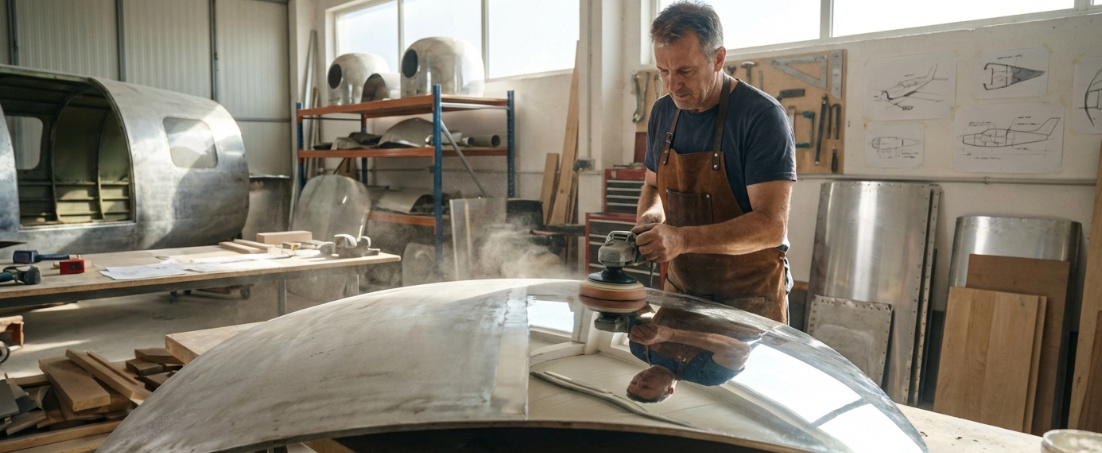
The aviation industry is not limited to travel in the sky. When an aircraft completes its economic life, it does not mean its story ends. The 2026 design vision moves beyond recycling to focus on the concept of upcycling. At the center of this movement are Planeskin (Aircraft Fuselage Skin) designs. At SkyArt, we transform retired massive fuselages into art pieces that add value to living spaces.
Every aircraft has a history of thousands of hours in the sky. Every scratch, rivet, and color change on the fuselage tells the operational history of that plane. Standard recycling processes melt this valuable material down into ordinary aluminum ingots. However, the aviation upcycling trend aims to preserve this heritage.
In 2026, interior designers choose pieces with a story over factory-made products to add character to spaces. An Airbus A340 window panel or a Boeing 747 engine cowling becomes a "statement piece" in modern offices or luxury homes. This approach supports a consumption model that reduces the carbon footprint without compromising aesthetics.
Producing furniture from aircraft parts requires much more complex engineering knowledge than carpentry. Aluminum alloys used in aircraft fuselages (typically 2024 or 7075 series) are manufactured to withstand corrosion, pressure, and extreme temperature differences. This material is lightweight yet possesses incredible structural strength.
Planeskin designs bring this industrial power to home decoration. Unlike a wooden table, a desk made from an aircraft wing is fireproof, unaffected by water, and defies the years. In SkyArt workshops, these parts are processed by preserving their original livery or by polishing them to a mirror-finish.
Thousands of rivets holding the aircraft fuselage together are the purest form of industrial design. In Planeskin furniture, these rivet lines form the main visual element of the design. This orderly, symmetrical, and metallic texture fits perfectly with minimalist or industrial decoration styles. Equipping original window voids with LED lighting or mirrors increases the depth of the material.
Designers use aircraft parts in creative forms. Parts cut from an aircraft fuselage take on these forms:
These designs attract art collectors as much as aviation enthusiasts. Each piece comes with a serial number and flight logbook; this proves the identity of the product.
The table below summarizes the differences between standard furniture and Planeskin designs:
|
Feature |
Standard Design Furniture |
Planeskin (Aircraft Part) Design |
|
Material |
Wood, MDF, Standard Metal |
Aviation Grade Aluminum / Titanium |
|
Durability |
Limited (Moisture/Heat effect) |
Very High (Corrosion and heat resistance) |
|
History/Story |
None (Mass production) |
Exists (Real flight hours and routes) |
|
Sustainability |
New resource consumption |
Waste management and circular economy |
|
Investment Value |
Decreases over time (Depreciation) |
Collection value increases |
|
Maintenance |
Requires regular polish/paint |
Easy to clean, polish creates new look |
As world resources deplete, the "throw-away" culture is leaving its place to the "transform-use" culture. In 2026 and beyond, the environmental impact of furniture will influence the purchasing decision as much as its aesthetics. Planeskin designs prevent tons of metal from rotting in scrapyards. SkyArt respects aviation history during this transformation process.
Placing an aircraft part in your home or office is not just a decoration choice. It is a concrete expression of passion for engineering, speed, and the sky. SkyArt continues to keep the giants of the sky alive on earth.


