
The Science of Jet Lag: How Flying Distorts Our Sense of Time

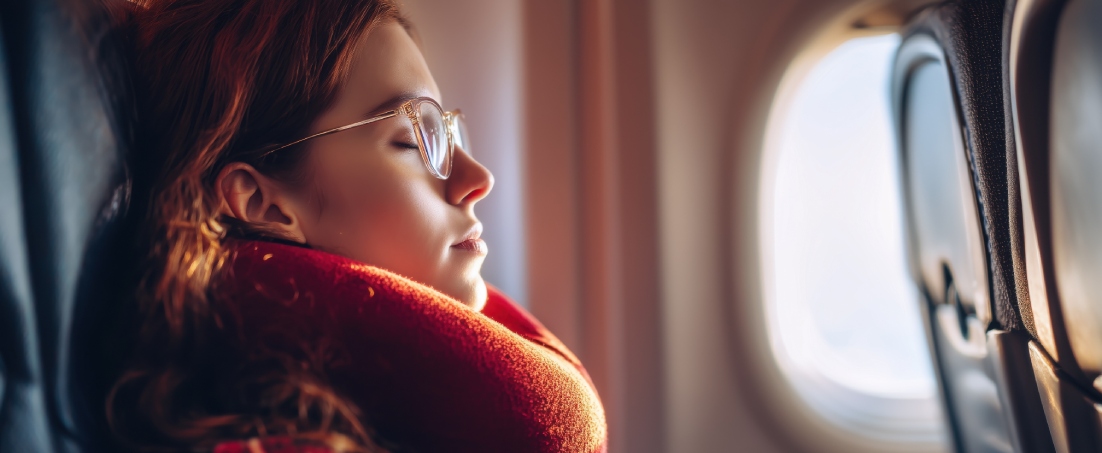
Jet lag is caused by the fact that the airline travels much faster than your internal clock
A person gets on the plane and it is noon. They take off the plane and it is midnight. Their stomach wants to have breakfast. Their eyes want to be sleeping. Their brain has conflicting information. That is what is referred to as jet lag.
The reason jet lag exists is because the time zone traveled through is larger than how quickly your internal clock can make adjustments. The airline is fast; your internal clock is slower.
Inside the human brain is a very small region known as the Supra Chiasmatic Nucleus (SCN) or Master Clock. It is located within the Hypothalamus. It is the central clock in your body and is responsible for controlling your Circadian Rhythm (sleep patterns, hormone production, body temperature and alertness).
The SCN is activated by light. When the eyes perceive light during the daytime, the SCN sends a message to the rest of the body telling it to "Wake Up." During nighttime hours, the body produces melatonin. Melatonin sends a message to the body telling it that it is time to go to bed.
When you cross multiple time zones traveling by air, the local time changes rapidly. However, your internal time does not change at the same rate. For example, if you flew from London to Tokyo, Japan is eight hours ahead of London. Your body still thinks it is London time. Therefore, your internal clock is out of sync with the local time, creating a situation known as Circadian Desynchronization.
Some common symptoms include:
Your body is still working under yesterday's schedule while the city you landed in is currently operating under today's schedule
Most pilots, airline employees and passengers also note that traveling westward is easier than traveling eastward. There is a simple explanation for this: the length of the human clock is slightly longer than 24 hours; approximately 24.2 or 24.3. As you travel west, you are essentially increasing the number of daylight hours which your body will adapt to. Conversely, when you travel east, you shorten the number of daylight hours and your body will resist moving its internal clock forward as quickly as the external world is trying to force it to do.
As stated earlier, since light affects the internal clock, using controlled amounts of light can help to reset the clock. Additionally, as previously mentioned, since melatonin triggers nighttime behavior, using timed melatonin tablets can also assist in getting the body to go to sleep at the correct time.
Exposure to morning sunlight can advance your internal clock to the new time.
Exposure to daylight during the day can help to move the internal clock back if necessary.
Taking a melatonin supplement at the appropriate time can communicate to the body that it is time to go to sleep.
Also, avoid consuming caffeine and/or alcohol after the sun sets as both substances disrupt normal internal signaling mechanisms.
While methods used by frequent flyers and those working in the aviation industry differ slightly, the underlying principle remains the same: help your body adjust to the new time zone prior to and after your flight.
Prior to your trip, gradually shift your sleep pattern one hour every few days if the time difference is large.
Drink plenty of water while flying as the airplane cabin is extremely dry.
Stretch and move around periodically to promote circulation and prevent fatigue.
Utilize apps such as Timeshifter to assist with planning your light exposure and sleep patterns. Many pilots utilize similar tools.
Protect your sleep with the use of an eye mask and earplugs.
Repetitive disruption of the body's circadian rhythm due to jet lag can result in disruptions to your metabolic system, immune function and emotional stability. Fatigue and gastrointestinal issues are two of the most commonly reported symptoms among pilots, flight attendants and individuals working irregular schedules. Understanding the nature of jet lag will enable individuals to better protect their overall biological balance as they travel extensively throughout their lives.
Jet lag or some form of travel-related issue will not deter people who are passionate about traveling. Those who are enthusiastic about aviation continue to fly for the joy of viewing the landscape, the sounds of the cabin and the sense of rising above the earth. Some of these enthusiasts would like to retain some aspect of that experience in their homes and offices to remind themselves of travel even when they are not flying. For these individuals, we design aviation-inspired furniture and aviation-inspired wall art, based on actual aircraft features and the clean lines of the cockpit. View our pieces here
Airlines allow you to travel from one end of the globe to the other in just a few hours. To follow your internal clock, you need to expose yourself to the right amount of light and darkness, and also provide your body with adequate sleep. With a well-planned approach to travel, you are able to travel with time, rather than against it. In addition, if aviation is an integral part of your life, you can also bring the ambiance of the cabin and hangar into your daily space.
Airlines allow you to travel from one end of the globe to the other in just a few hours. To follow your internal clock, you need to expose yourself to the right amount of light and darkness, and also provide your body with adequate sleep. With a well-planned approach to travel, you are able to travel with time, rather than against it. In addition, if aviation is an integral part of your life, you can also bring the ambiance of the cabin and hangar into your daily space.


